

Blog
Dynamic tariffs and AI in Growatt – turning volatility into profit

Dynamic tariffs and AI in Growatt – turning volatility into profit
Dynamic electricity tariffs across Europe are transforming how PV and storage systems should operate to remain profitable. Growatt’s Smart Scheduling Mode, Dynamic Pricing Mode and Negative Tariff Mode use AI and real‑time price data to automate energy trading while shielding users from negative prices.
What are dynamic tariffs and energy trading?
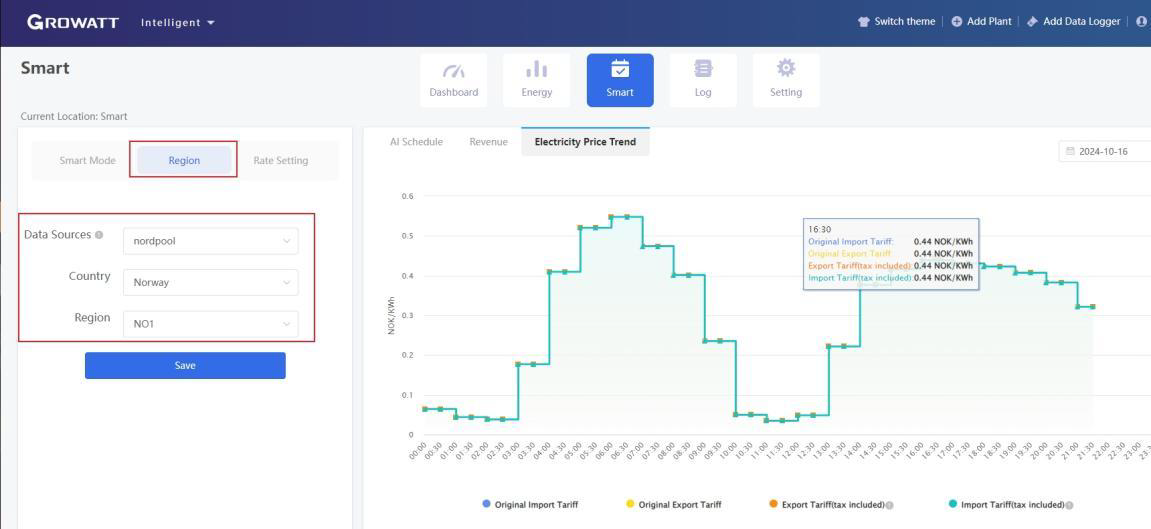
Dynamic tariffs are electricity pricing schemes where the kWh price changes hour by hour, typically linked to wholesale markets such as Nord Pool, EPEX Spot, OMIE, OTE or Octopus‑based tariffs. In practice this creates windows of very high prices, when exporting or avoiding grid imports is highly profitable, and periods of low or even negative prices, when feeding into the grid may incur costs instead of revenue.
For prosumers equipped with battery storage this enables active energy trading – charging batteries when electricity is cheap and exporting stored power or covering loads from the battery during expensive hours. Without automation, this would require constant monitoring of hourly prices and manual system changes, which is unrealistic for a 24/7 operation.
Smart Scheduling Mode – the intelligent core of the system
Smart Scheduling Mode is an intelligent operating mode for Growatt storage systems tailored to European markets with dynamic electricity tariffs. It combines AI, big data and weather plus consumption forecasting to automatically create a daily operating schedule for PV inverters and batteries.
Key capabilities of Smart Scheduling Mode:
- Analysing historical load and PV generation patterns to forecast consumption and production profiles.
- Pulling day‑ahead electricity prices from market data providers (Nord Pool, AWattar, EPEX Spot AT, OMIE, OTE, Octopus) for the user’s specific country and region.
- Generating daily charge/discharge schedules based on the principle “charge low, discharge or export high”.
The AI model typically requires around 4 weeks of operational data to fully learn the household’s consumption behaviour and deliver highly accurate scheduling. Once configured, the system runs continuously, adapting plans as new price and performance data becomes available.
Dynamic tariffs – Economic benefits: more revenue, lower bills
From an economic standpoint Smart Scheduling Mode focuses on three main goals: higher PV revenue, reduced grid costs and improved energy efficiency.
Intelligent energy management:
The system continuously tracks the balance between PV production, consumption and market prices, optimizing the flows between grid, PV and storage. As a result, PV self‑consumption and overall storage utilization are significantly improved.
Higher self‑consumption and PV revenue:
The system first uses PV power to supply local loads during high‑price hours, then exports surplus energy when feed‑in prices are attractive and finally stores excess in the battery. This ensures each kWh from PV has an optimized destination instead of being exported at random, potentially low tariffs.
Lower electricity bills:
During low‑price periods the battery is charged from the grid or PV, and during peak prices the system prioritizes battery discharge to cover household demand, reducing expensive imports. This effectively hedges against price spikes that are typical in dynamic tariff schemes.
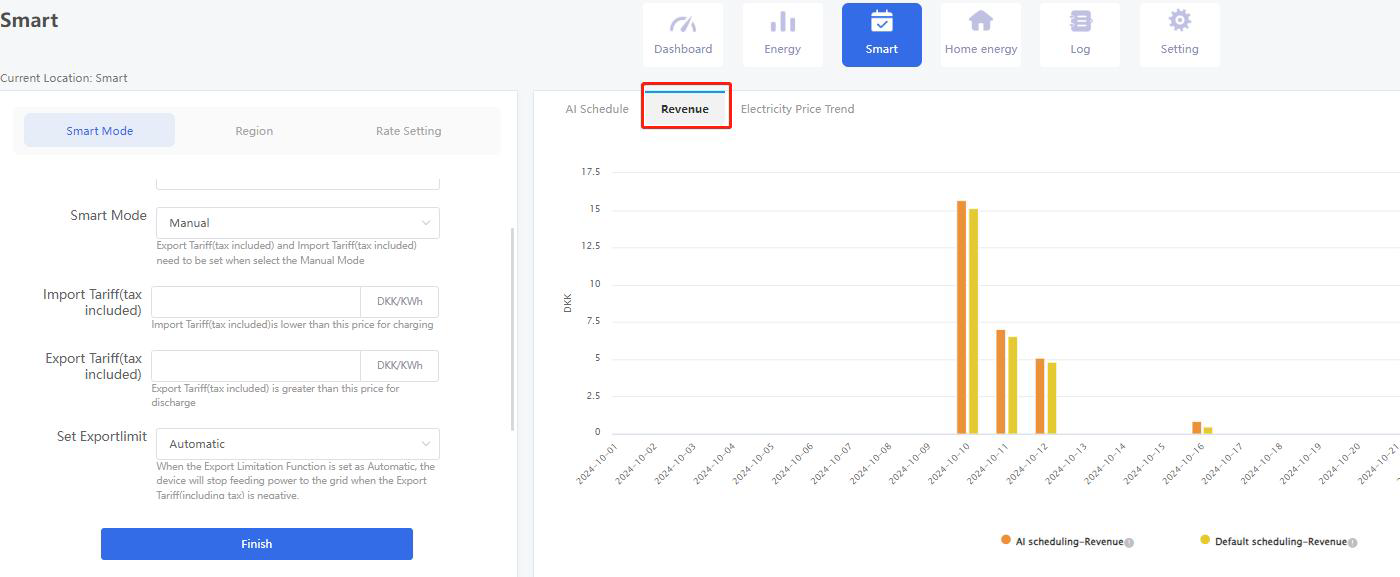
Negative Tariff Mode – protection from negative prices
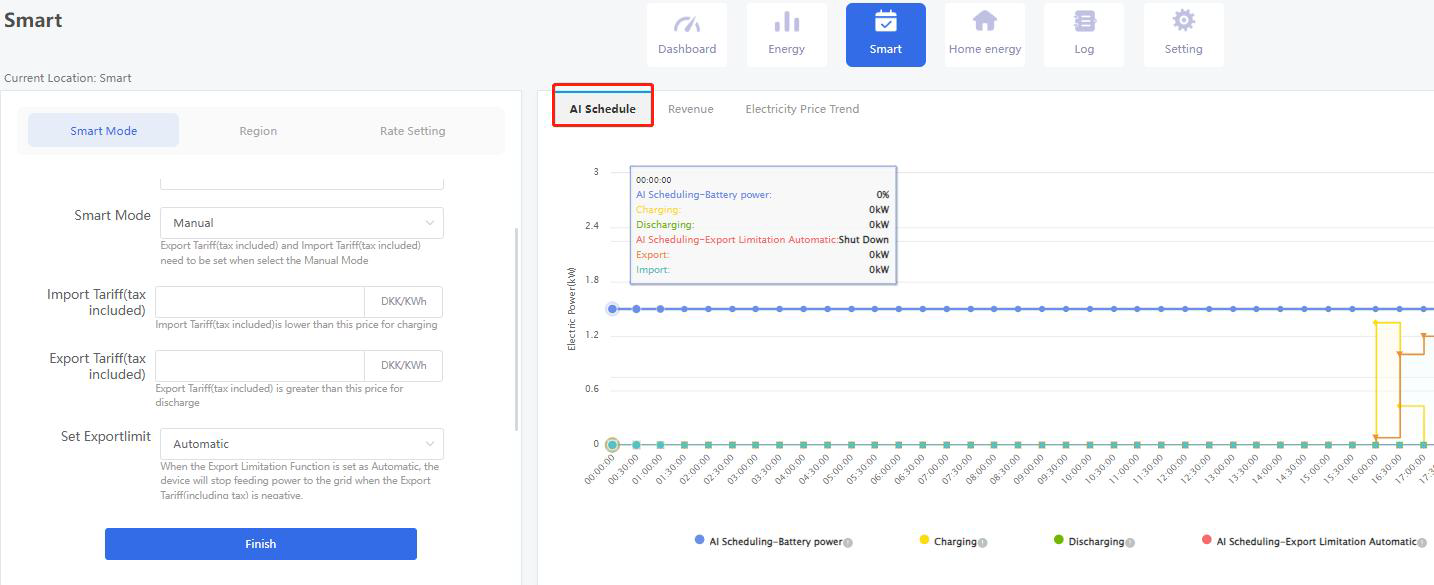
On many European markets grid overcapacity leads to negative pricing, where feeding PV power into the grid can actually cost money. Negative Tariff Mode on Growatt Server automatically reacts to these events by either cutting inverter output to 0 kW or enabling anti‑export mode during negative tariff periods.
How Negative Tariff Mode works:
- Once the correct country, region and price data source are configured, the system fetches upcoming negative price intervals from the market data.
- AI sends control commands up to 15 minutes before and after each negative‑price window to ensure reliable execution.
- During negative tariff hours, the inverter output can be reduced to zero or export to the grid is blocked, preventing any loss‑making feed‑in.
Users can monitor:
The Revenue chart, which displays estimated income attributable to Negative Tariff Mode across days and months.
The AI Schedule chart, which shows when export is blocked (left axis) and the expected inverter generation (right axis).
Dynamic tariffs – Supported devices and system requirements
Smart Scheduling Mode and Negative Tariff Mode are available for selected Growatt inverter families and datalogger models, especially those tailored to Europe. The documentation provides a detailed list, including MIN, MOD, MID, MAX, NEO and battery‑ready XH variants, along with minimum firmware versions for ShineWiFi‑X, ShineLAN‑X, ShineGPRS‑X and Shine4G‑X.
To ensure proper AI‑based operation, several conditions must be met:
- The plant must be installed in supported countries such as Norway, Sweden, Finland, Denmark, Estonia, Lithuania, Latvia, Austria, Poland, France, Germany, the Netherlands, Belgium or the UK.
- The correct market data source (Nord Pool, Octopus, AWattar, EPEX Spot AT, OMIE, OTE, etc.) must be selected for the region.
- Inverter and datalogger firmware must be updated to the special versions listed in the compatibility tables, which can be arranged via local Growatt service.
How Growatt makes dynamic tariffs manageable?
For both installers and end users Growatt’s ecosystem turns complex energy trading logic into a one‑time configuration task. After region, data source, taxes and basic operating parameters are set, the system automatically generates daily schedules that balance profitability, grid constraints and battery health.
The combination of Smart Scheduling Mode, NEXA 2000 Dynamic Pricing Mode and Negative Tariff Mode enables users to:
- maximize revenue from exporting energy during high‑price windows,
- minimise grid purchase costs through smart charging and discharging,
- avoid financial losses during negative tariff intervals,
- run their installations in a fully automated 24/7 mode without manual intervention.
Want to learn more about Growatt’s dynamic tariffs at MP Solar Group?
For offers, selection, and technical support regarding dynamic tariffs, please contact us at info@mpsolar.pl or by phone at +48 662 924 163.
MP Solar Group offers all Growatt devices that work with dynamic tariffs and electricity trading.
Read the instructions for activating dynamic tariffs in Growatt inverters: CLICK HERE
